

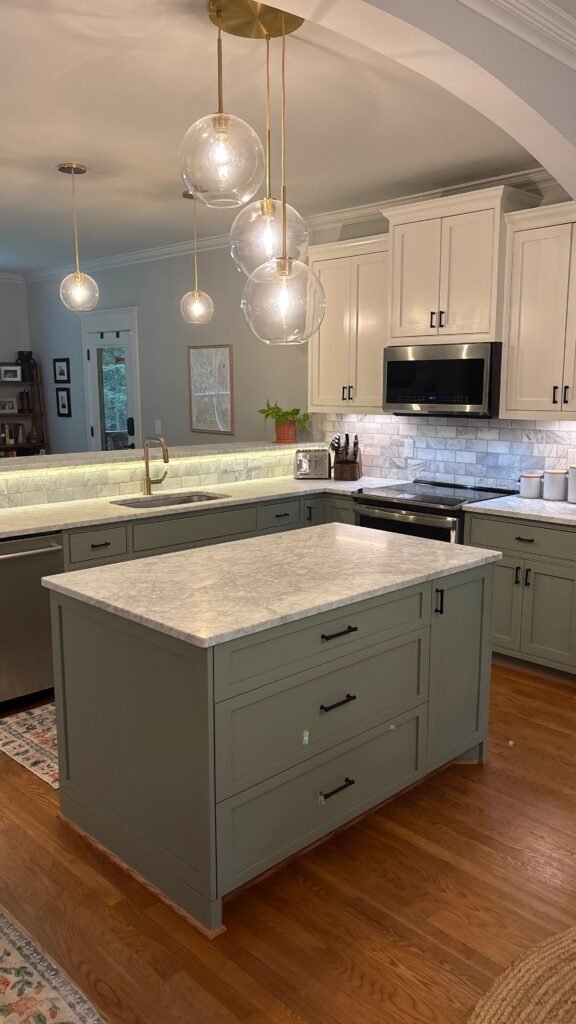
If you are considering updating your kitchen without replacing your existing cabinets, cabinet painting can be an effective way to give your home a fresh, modern appearance. One of the most common questions Raleigh homeowners ask is: How long does cabinet painting take in Raleigh, NC?
In most cases, a professional cabinet painting project can take approximately 3 to 7 days, depending on the size of the kitchen, number of cabinet doors and drawers, cabinet condition, preparation requirements, paint or coating system, drying and curing time, and the contractor’s process.
Smaller cabinet projects may be completed in just a few days, while large kitchens with extensive preparation, repairs, multiple coats, or specialty finishes may require a week or longer.
For homeowners in Raleigh looking for professional cabinet painting and refinishing, Bull Restoration can help evaluate the condition of your cabinets and determine the appropriate process and project timeline.
Average Cabinet Painting Timeline in Raleigh, NC
There is no universal timeline for every kitchen. A professional cabinet painting project involves much more than simply applying paint to cabinet doors.
A typical project may follow this general schedule:
| Project Stage | Approximate Time |
|---|---|
| Consultation and planning | 1–2 hours |
| Cabinet preparation | 1–2 days |
| Sanding/deglossing | Several hours to 1 day |
| Priming | Several hours to 1 day |
| Painting/coating | 1–2 days |
| Drying/curing | 1–3+ days |
| Reinstallation | Several hours to 1 day |
| Final inspection | Same day |
For an average Raleigh kitchen, the overall process may take 3–7 days, although the exact schedule depends on the cabinet size and finishing system.
Why Does Cabinet Painting Take Several Days?
Many homeowners assume cabinet painting should take only one day because paint can be applied relatively quickly. However, professional cabinet painting involves several stages.
The biggest difference between a quick DIY paint job and professional cabinet painting is preparation and finishing.
Cabinets must usually be cleaned, prepared, sanded or deglossed, primed when appropriate, coated, dried, inspected, and reinstalled.
Each stage is important for achieving a smooth and durable finish.
Rushing the process can create problems such as:
- Peeling paint
- Visible brush marks
- Uneven coverage
- Poor adhesion
- Rough surfaces
- Paint sticking between doors
- Premature wear
- Visible imperfections
A professional contractor generally allows sufficient time for each stage instead of trying to finish the entire project in one day.
Cabinet Painting Process: Step-by-Step Timeline
Understanding each stage can help you understand why your Raleigh cabinet painting project may take several days.
Step 1: Initial Consultation
The process typically begins with an evaluation of your cabinets.
During the consultation, the contractor can look at:
- Cabinet material
- Existing paint or finish
- Number of doors
- Number of drawers
- Cabinet boxes
- Cabinet condition
- Previous repairs
- Desired color
- Desired finish
- Kitchen layout
The contractor can then determine what preparation and coating system may be appropriate.
For Bull Restoration, the goal is to understand the existing cabinetry before recommending a painting or refinishing approach.
Step 2: Removing Cabinet Doors and Drawers
Before painting begins, cabinet doors and drawers may be removed.
This allows the individual components to be prepared and finished more carefully.
Each door and drawer should be organized so that everything can be returned to the correct location.
Depending on the size of the kitchen, this stage can take several hours.
Step 3: Cleaning the Cabinets
Kitchen cabinets often accumulate grease, cooking residue, dust, and other contaminants over time.
These contaminants can interfere with paint adhesion.
For this reason, thorough cleaning is an important part of cabinet preparation.
The amount of cleaning required depends on the condition of the cabinets.
A kitchen with significant grease buildup may require additional preparation time.
Step 4: Sanding or Surface Preparation
The existing cabinet finish may need to be sanded, scuffed, or otherwise prepared before primer or paint is applied.
The purpose is to create a suitable surface for the new coating.
This stage can take several hours or longer depending on the number and complexity of cabinet components.
Cabinets with detailed edges, raised panels, grooves, or decorative trim can require more careful preparation.
Step 5: Minor Repairs
If the cabinets have dents, scratches, cracks, damaged edges, or other imperfections, repairs may be required before painting.
Minor repairs can sometimes be completed as part of the preparation process.
More extensive damage can add additional time to the project.
If structural repairs are necessary, the contractor may need to discuss those separately before continuing with the painting process.
Step 6: Priming
Primer can be an important part of the cabinet painting process, particularly when making significant color changes or working with certain cabinet materials and existing finishes.
Primer can help create a consistent surface and improve adhesion when the appropriate product is selected.
Depending on the coating system and drying conditions, primer may require additional time before the finish coats can be applied.
Step 7: Applying the Cabinet Finish
After preparation and priming, the finish coats are applied.
The application method depends on the cabinet material, product, design, and desired appearance.
Professional cabinet finishing may use controlled spraying or other appropriate application methods to achieve an even finish.
The number of coats can vary.
A major color change—for example, from dark brown cabinets to white cabinets—may require additional coverage compared with a similar-color transformation.
Step 8: Drying Between Coats
Drying time is one of the most important reasons cabinet painting cannot always be completed in a single day.
A coating may feel dry on the surface while still needing additional time before another coat can be applied or the cabinet component can be safely handled.
Temperature, humidity, ventilation, coating type, and application thickness can all influence drying.
Raleigh’s seasonal weather can also affect working conditions, particularly when humidity levels are higher.
A professional contractor should follow the coating manufacturer’s recommended drying and recoat times.
Step 9: Curing
Drying and curing are not exactly the same.
A coating may be dry enough to handle before it has reached its full hardness.
This is especially important for kitchen cabinets because doors and drawers are opened and closed frequently.
Homeowners should follow the contractor’s instructions about when normal use can resume.
Avoiding excessive handling during the early curing period can help protect the new finish.
Step 10: Reinstalling Doors and Drawers
After the finish has reached the appropriate stage, cabinet doors and drawers can be reinstalled.
Hardware may also be reattached or replaced if the homeowner has selected new knobs, pulls, or hinges.
This stage can take several hours depending on the size of the kitchen.
Step 11: Final Inspection
The final stage involves checking the completed cabinets.
The contractor may inspect:
- Color consistency
- Coverage
- Edges
- Door alignment
- Hardware
- Cabinet boxes
- Visible imperfections
- Overall finish
Any necessary touch-ups can be addressed before the project is considered complete.
How Long Does a Small Kitchen Take to Paint?
A small Raleigh kitchen with a limited number of cabinets may take approximately 3–4 days under suitable conditions.
The exact timeline depends on:
- Number of cabinet doors
- Cabinet condition
- Amount of preparation
- Coating system
- Drying requirements
- Repairs
A small kitchen with cabinets in excellent condition may move through the process faster than a larger kitchen requiring extensive preparation.
How Long Does an Average Kitchen Take?
For a typical kitchen, homeowners should generally plan for approximately 4–7 days for a professional cabinet painting project.
This timeframe provides enough time for preparation, coating applications, drying, reinstallation, and inspection.
The project may take longer if the homeowner chooses a complex finish or major color transformation.
How Long Does a Large Kitchen Take?
Large kitchens can take 7 days or longer, particularly when they include:
- Large numbers of doors
- Multiple cabinet sections
- Kitchen islands
- Tall pantry cabinets
- Detailed cabinet profiles
- Extensive repairs
- Heavy existing finish
- Significant color changes
A large project may also require additional coordination to keep the kitchen functional while the work is underway.
Can Cabinet Painting Be Completed in One Day?
In some very small or simple projects, painting may be completed quickly. However, a complete professional cabinet painting project should not automatically be expected to take only one day.
A one-day service may not allow enough time for thorough preparation, multiple finish coats, proper drying, and curing.
If a contractor promises an entire large kitchen will be fully prepared, painted, dried, and ready for normal use within a single day, homeowners should ask exactly what process and products are being used.
Quality cabinet painting is about more than speed.
What Can Make Cabinet Painting Take Longer?
Several factors can extend the project timeline.
Cabinet Damage
Damaged cabinets require additional preparation and repairs.
Grease and Dirt
Heavily contaminated kitchen cabinets require more cleaning.
Multiple Paint Layers
Old finishes or previous DIY paint jobs may require additional preparation.
Complex Cabinet Designs
Raised panels, grooves, trim, and decorative details can take longer to prepare.
Color Changes
Dark-to-light transformations may require additional coats.
Humidity
Environmental conditions can influence drying and curing.
Additional Hardware
Installing new handles, knobs, hinges, or other hardware adds work.
Kitchen Size
More doors and drawers naturally increase the amount of preparation and finishing required.
Does Cabinet Painting Make a Mess?
Professional preparation should include protecting the surrounding kitchen.
Countertops, appliances, flooring, walls, backsplashes, and other surfaces should be appropriately protected during the project.
The amount of disruption depends on whether the cabinet components are finished on-site or elsewhere and on the contractor’s workflow.
Homeowners should ask the contractor how the work area will be protected before the project begins.
Can I Use My Kitchen During Cabinet Painting?
In many cases, homeowners can continue using portions of the kitchen, but normal use may be limited while cabinet doors and drawers are being worked on.
For example, if cabinet doors have been removed, access to dishes, cookware, food storage, and other items may be temporarily inconvenient.
Before work begins, ask the contractor:
- How long will doors be removed?
- Can the kitchen sink remain operational?
- Can appliances be used?
- Where will cabinet doors be stored?
- When can cabinets be used normally?
- What areas of the kitchen will be inaccessible?
Planning ahead can make the process much easier.
How Long Do Painted Cabinets Last?
The lifespan of a cabinet finish depends on preparation, coating quality, cabinet material, application technique, usage, cleaning practices, and environmental conditions.
High-use kitchen cabinets experience frequent touching, opening, closing, and cleaning.
Proper preparation and using a coating system designed for cabinetry can help create a more durable finish.
Homeowners should also follow the contractor’s cleaning and maintenance recommendations after the project is completed.
Why Choose Bull Restoration for Cabinet Painting in Raleigh, NC?
If you are searching for cabinet painting in Raleigh, NC, choosing an experienced local contractor can help you understand both the process and expected timeline.
Bull Restoration can help Raleigh homeowners refresh existing cabinetry without necessarily replacing the entire kitchen.
Professional cabinet painting can be an excellent option when:
- Existing cabinets are structurally sound
- You like the current kitchen layout
- You want a new cabinet color
- Your cabinets look outdated
- You want to improve the kitchen’s appearance
- You want to avoid the disruption of complete cabinet replacement
Bull Restoration can evaluate your cabinets and help determine the appropriate preparation and finishing process for your project.
Cabinet Painting vs. Cabinet Replacement
If your cabinets are structurally sound, painting can provide a significant visual change without removing and replacing the entire cabinetry system.
Replacement may involve demolition, disposal, new cabinets, installation, hardware, countertop considerations, and potentially other remodeling work.
Cabinet painting generally focuses on transforming the existing cabinetry.
For homeowners who like their kitchen layout but want a different style, cabinet painting may be a practical alternative.
Frequently Asked Questions
How long does cabinet painting take in Raleigh, NC?
A professional cabinet painting project in Raleigh commonly takes approximately 3–7 days, although small projects may be shorter and large or complex kitchens may take longer.
How long does it take to paint kitchen cabinets professionally?
Professional cabinet painting can take several days because the process includes cleaning, preparation, sanding or deglossing, priming when needed, painting, drying, curing, reinstallation, and inspection.
Can cabinets be painted in 2 days?
Some small projects may be completed within two days, but a larger kitchen may require more time. The contractor should allow sufficient drying and curing time for the selected coating.
How long should I wait before using painted cabinets?
Follow the specific recommendations provided by your cabinet painting contractor and coating manufacturer. A finish may feel dry before it has fully cured.
Does humidity affect cabinet painting?
Yes. Temperature and humidity can influence drying and curing times. Professional contractors should account for environmental conditions when planning the project.
Is cabinet painting faster than cabinet replacement?
Generally, painting existing cabinets can be completed more quickly than a full cabinet replacement because it avoids many steps associated with demolition, manufacturing, delivery, and installation.
Should I paint or refinish my Raleigh kitchen cabinets?
The right choice depends on the existing cabinet material, condition, current finish, and desired appearance. A professional evaluation can help determine whether painting or a more extensive refinishing process is appropriate.
Final Thoughts: How Long Should You Plan for Cabinet Painting in Raleigh?
If you are planning a cabinet painting project in Raleigh, NC, a good starting expectation is approximately 3–7 days for a professional project.
However, the actual timeline can vary based on kitchen size, cabinet condition, number of doors and drawers, preparation requirements, repairs, coating system, color change, drying conditions, and finishing details.
The fastest project is not necessarily the best project. Proper preparation and sufficient drying and curing time are essential for achieving a professional-looking cabinet finish.
If you are ready to update your kitchen, Bull Restoration can help you understand your cabinet painting options and determine a realistic project timeline.
Looking for professional cabinet painting in Raleigh, NC? Contact Bull Restoration today to discuss your cabinets, preferred color, project goals, and estimated timeline.